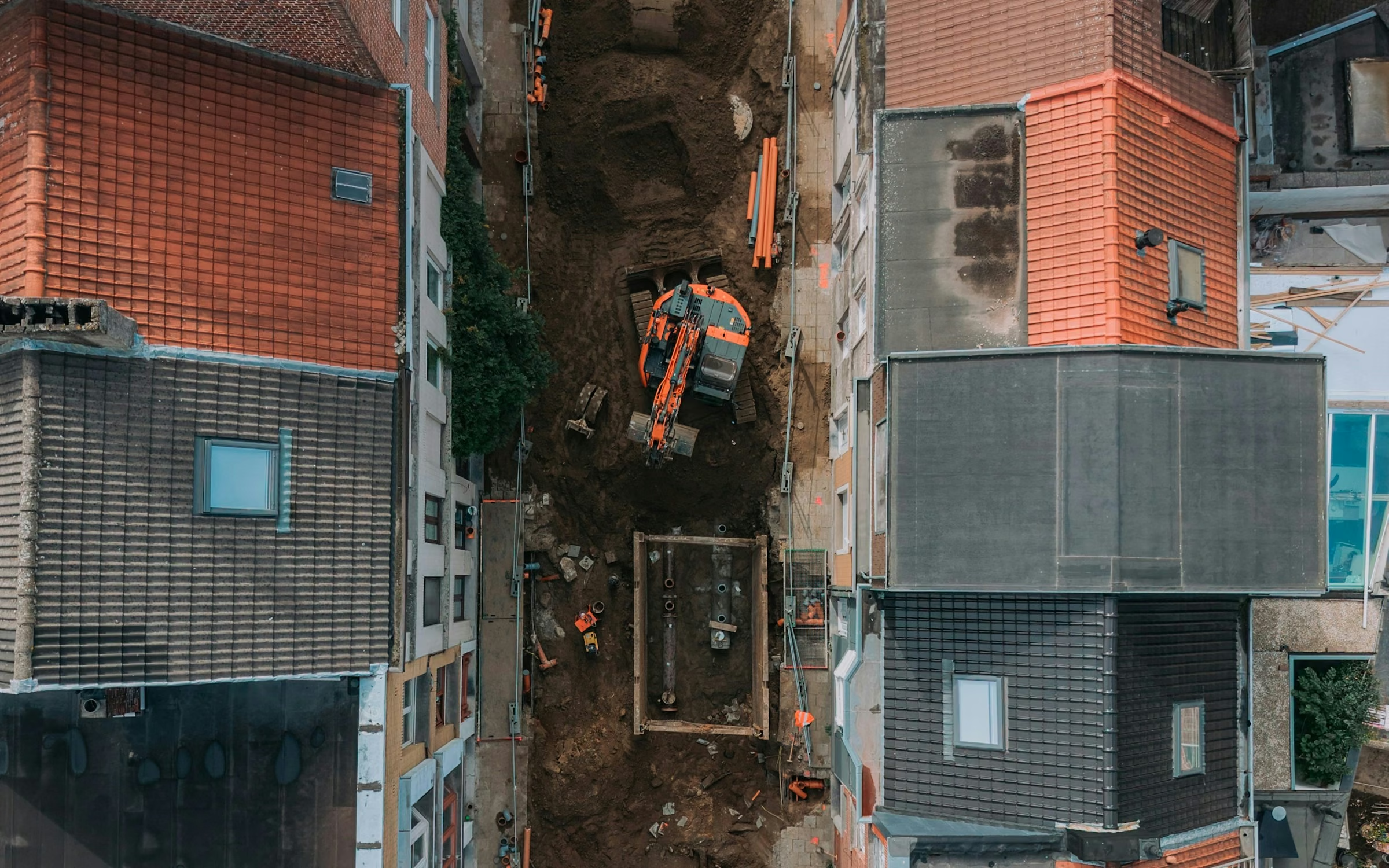
 Photo from Unsplash · Drones for companies
Before hiring a drone pilot for a company job in Spain, check four things: that the pilot is registered as an operator with AESA (the Spanish Aviation Safety Agency), that they hold a valid certificate for the type of flight you need, that they have civil liability insurance in force, and that they can explain where they will fly and under what permission. Since 1 January 2026 the old national scenarios STS-ES-01 and STS-ES-02 are no longer valid: only the European scenarios STS-01 and STS-02 can be used. A pilot who still talks about the old ones is out of date. If any of these papers is missing, the risk is not only the pilot's: a fine or a flight ban can stop the shoot or the inspection of the company that hired them.
What changed in the rules
In Spain, drones are governed by European regulation 2019/947 and by Royal Decree 517/2024, in force since 25 June 2024. Operations fall into three categories by risk: open (low risk), specific and certified. Many company jobs, such as filming a building site, a hotel or a facility near people or buildings, or flying without the drone in sight, do not fit the open category and are done in the specific category. There the pilot must be registered as an operator and fly under a standard scenario declaration (STS) or an AESA authorisation for the specific case. Until 31 December 2025 the national scenarios STS-ES-01 and STS-ES-02 could be used. Since 1 January 2026 only the European ones are valid.

The two European scenarios, in plain words
STS-01 is for flying with the drone in the pilot's sight, up to 120 metres high, over a controlled area on the ground, even inside a built-up area. It requires a drone carrying the class C5 marking. STS-02 allows flying without the drone in sight, over a controlled and sparsely populated area on the ground. It also flies up to 120 metres high and with good visibility (more than 5 km). Without airspace observers, the drone must stay within 1 km of the pilot and follow a route programmed in advance; with observers it can go up to 2 km. It requires a drone carrying the class C6 marking. In both cases the drone must carry direct remote identification. The pilot must have passed the AESA theory exam and done the practical training for each scenario at a recognised centre. The theory certificate is valid for 5 years.
What a pilot should show you before you hire them
- Their operator number, issued on the AESA online office and shown on the drone.
- Their STS pilot certificate with its expiry date (valid for 5 years), and the practical training for the specific scenario (STS-01 or STS-02), or the AESA authorisation for that job.
- Civil liability insurance in force, with the policy and an up-to-date receipt. In the specific category it is mandatory.
- The drone model they will use and whether it meets the class the scenario requires (C5 or C6). An older drone or one of another class may not be allowed for that flight.
- A check of the flight area: restricted airspace, or near an airport, a heliport or a protected space. It is checked on the ENAIRE viewer and, if needed, permission is requested.
- In an urban environment or over gatherings of people, prior notice to the Ministry of the Interior, which the operator must send at least 5 calendar days ahead.
- Permission from the owner of the place where the drone takes off and lands, and a plan for people who may appear in the footage, because faces and number plates fall under data protection law.
If the pilot answers these seven points with confidence and with papers, the job usually runs without problems. If they say «you don't need that», it is a warning sign.
What happens if the rules are not followed
Royal Decree 517/2024 provides for penalties, flight bans and loss of certificates. And if an accident happens without insurance, the cost can fall on whoever commissioned the service. The rules change often and the final source is always AESA, so before a large job it is worth checking the current situation on its website.